

Bellevue project
Behind the conversion are yacht designers, electrical engineers and offshore sailors. Four disciplines interlock – from the carbon structure through the propulsion to the systems on board.
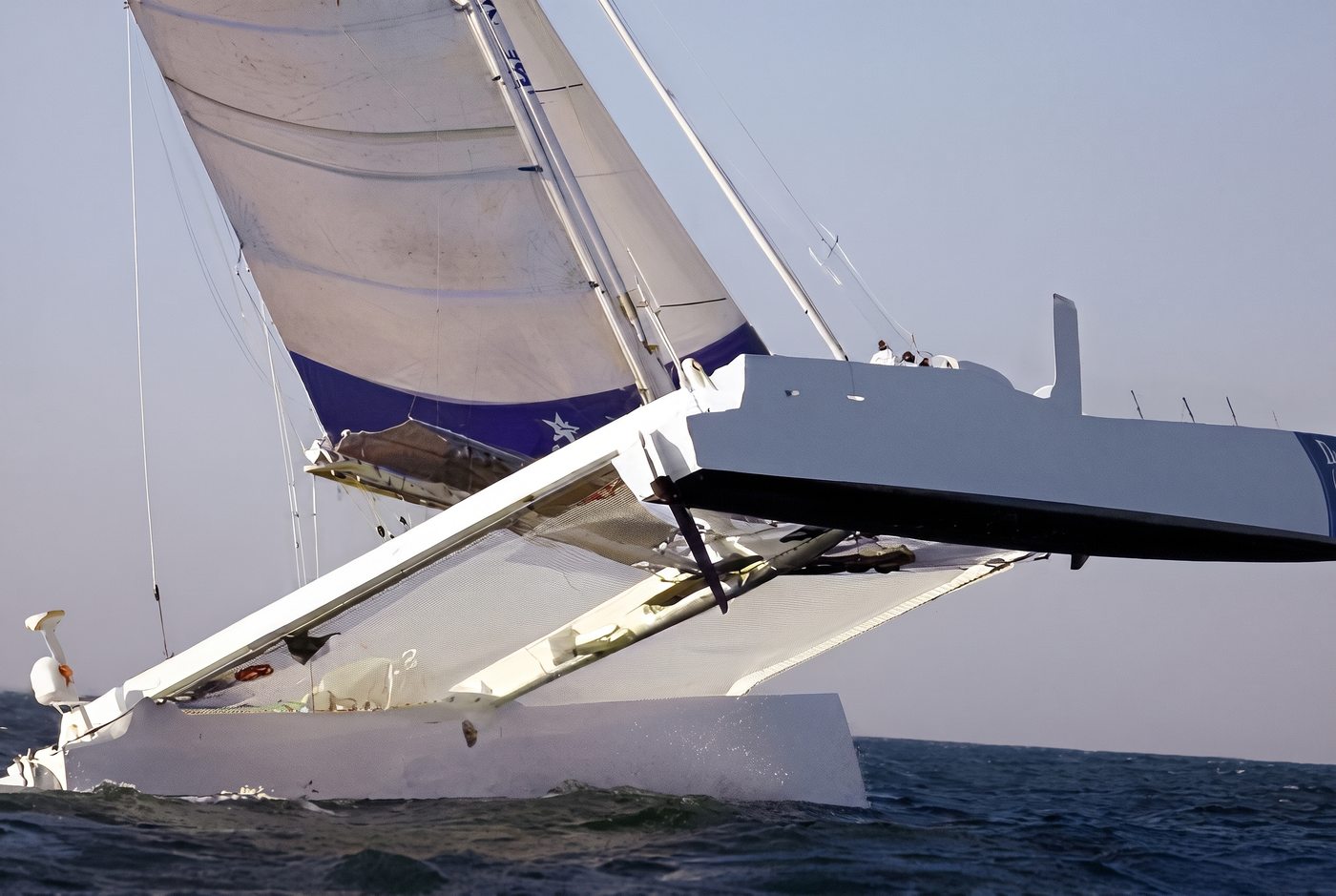
How we work
Turning a racing catamaran into a zero-emission cruising yacht calls for fields that rarely sit at the same table: carbon construction, power electronics, energy management and experience on the open sea. What matters is less the individual role than the interface between them – whoever sizes the batteries has to know what loads the structure allows.
The platform comes from the Swedish yard Marstrom Composite: carbon pre-preg with a Nomex core, laminated in an autoclave. The conversion relies on exactly that property – repairable and extendable without losing performance.
330 kWh of propulsion batteries, 20 kWp of solar output and recovery through the propellers have to be designed as one system. The battery management determines the service life and safety of the energy sources on board.
A central BUS network links the domestic electronics, sensors continuously monitor the load on the structure, and AI-assisted cameras detect objects at sea. Every system has to keep working when another fails.
Under Captain Roman Paszke the vessel was on a circumnavigation course and holds a course record. That experience feeds into decisions that cannot be made at a desk.